Showing posts with label Canadian health care. Show all posts

Wednesday, January 9, 2008

Preventable death rate U.S.higher than Canada

Canada's health care system offers "excellent value for the money" says a British researcher who has studied preventable deaths in 19 industrialized nations.

The study, to be released today in Health Affairs, looks at "amenable mortality", deaths that would not have occurred if effective health care had been available.

Conditions that caused these deaths included bacterial infections, treatable cancers, diabetes, some cardiovascular disease and the complications of common surgical procedures. The study, which looked at figures from 2002-03, updated a similar report based on 1997-98 figures.
Its goal was to compare amenable deaths in the United States with 14 western European nations, plus Canada, Australia, New Zealand and Japan.

The study also tracked whether gaps in these countries had narrowed or widened. The figures were computed according to amenable deaths per 100,000 population under the age of 75.
In the first study, the researchers found that amenable deaths in the U.S. stood at 114.74 per 100,000 population, exceeded only by Ireland, Portugal, Finland and the United Kingdom.

In that time period, Canada's amenable mortality rate was 88.77, the seventh-lowest rate after France, Japan, Spain, Australia, Sweden and Italy.
In the most recent study, Canada's amenable death rate had dropped to 76.83, putting Canada sixth after France, Japan, Australia, Spain and Italy.

Meanwhile, amenable mortality rates in the U.S. have barely budged from 114.74 to 109.65 in 2002-03, taking the U.S. from 15th place to last place among the 19 countries.

"This study shows that Canada's health system has performed very well in its ability to prevent people from dying from treatable conditions," said Martin McKee, a researcher at the London School of Hygiene and Tropical Medicine, and co-author of the study.

"While everyone has to die from something, sometime, in an ideal world, no-one would die from the causes we have looked at, in the age groups we have included."

"Of course, we don't live in an ideal world," said McKee.
"However, the bottom line is that the Canadian health system delivers outcomes that are substantially better than those in its southern neighbour."

"More importantly, outcomes in Canada are improving more quickly than those in the U.S.," he said.
"Given that the U.S health care system is far more expensive, this suggests that Canadians are getting excellent value for money."

The researchers expect there will be further improvements in amenable mortality rates in industrialized countries, but the rate will slow down.

The most significant gains were made in the 1970s and 1980s, when drugs to treat common conditions such as hypertension became widely available, said McKee.
That raises questions about whether the U.S. will be able to narrow the gap between itself and countries with much lower amenable mortality rates, he said.

"Other research shows that many Americans are unable to afford the prescription drugs they need," said McKee.

"So, if some future administration can tackle this then we could see real improvements there." In countries like Canada, he expects the main gains will be less in amenable mortality and more the the quality of life, especially for older people.

Source: Ottawa Citizen

Tuesday, January 8, 2008

Unique mentorship program started in York Central Hospital

As part of building capacity at York Central Hospital in Richmond Hill, Ontario, a strategy was created to enhance the learning environment for staff, attract staff to the organization and reduce the significant turnover within the first year.

To this end a dynamic mentorship program, the first of its kind in Canada, was created supported by the Ministry of Health and Long-Term Care inter-professional education initiative and York Central Hospital (YCH) Foundation.

“The mentorship program has been extremely successful in recruiting and retaining staff nurses,” says Interim Professional Practice Leader Audrey Sheridan.

“Many new graduates told us that they chose YCH over other hospitals because of the mentorship program.
It speaks volumes about the value the organization places on nursing, both experienced and new graduates. The mentorship program has truly been a catalyst for YCH, raising the bar for nursing education and clinical development across the organization.”

This multifaceted program includes a number of components including mentorship development; supernumerary time for mentor support of newly hired staff; extended program development support for both experienced and new graduate staff; clinical fellowships; specialty certifications; national certifications and degree support bursaries.

New hires (experienced and new graduates) spend their first three weeks on the job learning in a classroom environment. Content includes: Assessment and Management of Pain; Risk Prevention and Assessment and Management of Stage I-IV Pressure Ulcers; Screening and Caregiving Strategies for Delirium and Dementia; Fall Prevention; Vascular Access and Diabetes Management drawn from the Registered Nurses Association of Ontario’s (RNAO) Best Practice Guidelines (BPGs).

Following the in-class portion, new nursing hires are assigned mentors and begin working with them on their specific nursing services. Further development components related to relationships include: providing and receiving feedback, responding to emotionally charged situations, building trust and Patient Focused Care which was based on the RNAO’s BPGs for Client Centered Care, Therapeutic Relationships and Leadership.

Read the rest of the story here

Editor's opinion:

“Mentorship is a key solution to transfer valuable knowledge in any kind of profession.
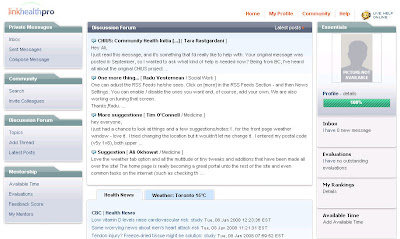
Recently, I came across a virtual community for health care Professionals that has a built-in mentorship program.
Health care professionals can share their knowledge in various ways on that community, such as on a forum and via private messaging.

It's called LinkHealthPro and is free to sign on. ”LinkHealthPro

Genetic mapping of Quebec commences

Efforts to create a genetic map of Quebec begin in earnest this month as researchers start recruiting people willing to offer up their bodies' blueprints.

The University of Montréal-driven project aims to sign up the first 400 people from Montreal, Monteregie and the Eastern Townships, with the aim of eventually collecting data on health and disease from just over 20,000 people.

The government-funded project is expected to create one of the largest data and biobanks in Quebec and will be made available to health researchers.

"The genome of each human being contains enormous quantities of information. The analysis of this information can increase our understanding of the underlying processes of health and disease," Dr. Claude Laberge, a geneticist and scientific director of the CARTaGENE project, said in a release.

The initial subjects, all between the ages of 40 and 69, will be selected at random using a list provided by the province's health insurance board.

Laberge says focusing on subjects in this age group means researchers know they will find that one-third are already coping with a variety of ailments including hypertension, cardiovascular diseases and arthritis.

Read the full story here

Thursday, January 3, 2008

Burnout drives many women out of medicine

Across all health care occupations, from nurses to pharmacists to dental technicians, roughly 80 percent of the workforce is female, according to Statistics Canada.

It's becoming increasingly common as more and more women pursue medical careers, and it's the latest twist on what may be the country's most critical health care issue: the doctor shortage.

But the physician population has always been male-dominated, and this influx of women will add fuel to the doctor crisis in Canada.
Female doctors commit fewer hours and fewer years to the medical system than males, and family duties are at least one reason why.

Despite their demanding careers, women are still given the bigger proportion of child care, housekeeping and elder care, but this pressure comes with a price.

"Burnout"drives many women out of medicine altogether, and with five million Canadians currently without a family doctor, things are only getting worse.

A 2005 survey found that just 23 percent of Canadians were able to see a physician the same day they needed one, placing this country last among the six studied, including the U.S., Britain and Australia.

Canada's doctor-patient ratio is among the worst of any industrialized nation: with just 2.2 physicians per thousand people, it ranks 24th out of 28 OECD countries, which iswell below the average of three.
Among the G8 countries, Canada even ranks dead last when it comes to physician supply.

Source: CNW Group

Editor's opinion:
"A conclusion could be that husbands of women that pursue medical careers, are not contributing to the household and child care sufficiently."

Wednesday, January 2, 2008

York University needs to improve Medical Education

Originally designed as a feeder school for the University of Toronto, York University has managed to break away, except when it comes to medical students who are still forced to leave after completing their undergraduate degrees.

According to York University’s mission statement: “We promise excellence in research and teaching in pure, applied and professional fields.”

Since York’s founding in 1959, however, a strong emphasis has been placed on the arts and fine arts, while future doctors have moved on to other schools for further education.

Canadian universities do not have enough medical schools to keep up with the growing need for professional doctors.
Only four medical schools have been created in Canada since 1959, and only one since 1968. During this same time, the population of Canada grew 178 percent from 18 million to 32 million.

According to the Canadian Medical Association Journal, the average general practitioner in Canada works 51.4 hours per week.
From 1979 to 2003, the average Canadian workweek dropped from over 34 hours per week to around 33 hours per week.

Despite doctors working over 50 hours per week, many Canadians still have a hard time trying to find family doctors and wait times at hospitals have increased dramatically.

Meanwhile, Canada has seen a reversal of the brain drain of the mid 1990s, which saw its peak with around 1.5 percent of Canadian doctors leaving Canada to work in the United States, according to the Canadian Institute for Health Information.

Fortunately, 2006 was the third year in a row that saw a brain gain, with 238 doctors returning from abroad and only 207 leaving.
This only represents 0.05 percent of Canada’s 62,307 practicing physicians, which is not nearly enough of an increase to significantly affect hospital wait times, overworked doctors or the lack of family physicians.

The average age of doctors in Canada continues to increase, reaching 49 in 2006, with only 23 percent of doctors in Canada being under 40 and 19 percent being over 60.
The need for young doctors has never been greater, and in order to fill this need Canada needs more medical schools.

Most of the schools York competes against, including the University of Toronto, McMaster University, the University of Western Ontario and the University of Ottawa, all have quality medical schools.

York has managed to compete with and often surpass the big established programs with its business and law faculties, now it needs to do the same with a medical school.

After all, shouldn’t an interdisciplinary university strive to give their students everything that is possible, instead of simply taking the easy route and sticking to what they know best?

Source: Excalibur

Tuesday, January 1, 2008

Canadian Blood Services needs 'New Blood', literally!

As we continue through the holiday season, there's one gift that's always in demand: blood.

About every minute, someone in Canada needs a blood transfusion.

It's disturbing to learn then that a sizable portion of the population can't donate needed blood or bone marrow because they don't speak English or French.

Apparently, Canadian Blood Services can't accept blood from these people because of concern over their inability to accurately answer sensitive questions about their health and lifestyle that could affect the safety of the blood supply.

The service says it doesn't have either the staff to translate applications or nurses who speak multiple languages.

In a province where more than a quarter of the residents don't speak English or French as a first language, it's a significant issue.

Especially since the best chance of finding a match for some products like bone marrow is within a recipient's own ethnic group.

We'd have thought Canadian Blood Services would try harder to accommodate our multi-racial and multi-lingual reality. The language barrier isn't one that can't be overcome.

As far as safety is concerned, while many questions asked of donors help to pre-screen blood, afterwards the blood itself is tested for hepatitis, AIDS and a variety of other diseases.

The existing pool of blood donors is becoming older and fewer.
If the Canadian Blood Service hopes to do its job in the future, it's going to have to make changes.

We need new blood, literally!

This year, in British Columbia , Canadian Blood Services will need to collect 1,200 red blood cells or platelet donations by January 4th to help meet hospital needs.

For all of Canada, call Canadian Blood Services at 1-888-2-DONATE (1-888-236-6283) for blood donor clinic information, eligibility information or to book an appointment.

Source: Chilliwack Times

Monday, December 31, 2007

Two great stories about Canadian health care professionals

Here are two interesting stories I came across, about two Canadian health care professionals who have been active elsewhere in the world to share knowledge with their local health care professional counterparts.

Both are on their own, unique mission:

The first is Dr. Laura Louie, a naturopathic doctor from Vancouver, who set up an acupuncture clinic for HIV infected people in Thailand.

"It's Tuesday morning and Louie is only a few days off the plane from Canada when she arrives at the Mae On Clinic, bright and early so she can consult with head nurse Unchalee Pultajuk before the patients start arriving for the weekly HIV-acupuncture clinic."

"........Patients move from the acupuncture beds to a chair where a Tui Na massage completes their treatment. The traditional Chinese massage is done with bare hands -- "with healing, touch is so important"

The second is Dr. David Chaulk, a pediatrician from Alberta, who teaches Yemeni health care professionals the advanced knowledge from Canada and to help them catch-up.

“When I first arrived in Yemen and began teaching it was easy to have a feeling of superiority — for lack of a better word,” Chaulk said. “As Canadian physicians we have far better education, far superior training and more experience."

"..........You see two children to a bed, two patients with one intravenous infusion going to both patients and extremely malnourished, dehydrated and dying children that would be in intensive care units in Canada lying on a bed, being cared for primarily by the parents and with no monitoring equipment or any type of modern medical devices..........."


Enjoy reading the full stories (just click on their names)

Canadian girl's medication for rare disease not completely covered by health care system

Renee Stocks, a four-year-old Canadian girl from a suburb of Ottawa, was diagnosed with the medical disorder 'Glutaric Acidemia type II', also called GA II, only two-and-a-half years after the first clinical signs of her illness appeared.

The very rare disease prevents the human body from producing enzymes needed to breaking down dietary fats and proteins into forms than can easily be handled by the body.
Without these enzymes, fats and proteins build up and will cause damage to the brain, liver, lungs and kidneys.

Had Renee been tested at birth, she could have been put on a strict diet that would have reduced her chances of serious health problems later in life, according to Frank Frerman, a professor of pediatrics at the University of Colorado Health Sciences Center.

Her parents had no idea anything was wrong with her until she became seriously ill at 9 1/2 months.
She was rushed to the hospital by ambulance after vomiting and a high fever that left her slumped over in her baby seat and then spent 72 days in intensive care on life support.

“We were passed from medical service to medical service, trying to find out what was wrong with her,” Renee's mother, Ms. Stocks said.

On Renee's third birthday, following a series of tests, including organ and muscle biopsies, the family got the bad news when a hospital in Colorado confirmed that Renee had GA II.

Renee's language development was behind her peers but she has since caught up with the help of speech therapy. However, she is taught at home instead of attending junior kindergarten classes at school, because the risk of coming in contact with a sick child is too high.

The Stocks have had to refinance the family home to help pay for Renee's special diet and put other plans on hold, including a summer vacation and finishing the basement.
The high carbohydrate diet prepared by the Hospital for Sick Children in Toronto includes fake chicken fingers and macaroni and cheese.

To restrict the amount of amino acids, which Renee cannot break down, the diet adds components of protein individually.
Ms. Stocks said the federal government recently agreed to pick up the tab for the diet.

But her big worry is how the family will pay for the experimental drug Renee started taking on December 1st.
The drug, known as L-3-Hydroxybutyrate, was developed by a Belgian doctor, Johan Van Hove, who now works at the Colorado lab, and costs $200 a day.

It is known as an orphan drug because the cost is not covered by private insurance plans or the Ontario government.
It is also well beyond the reach of what her husband, Andrew, earns as a paramedic.
Local residents recently held a fund raiser for the family, raising $14,200, enough for a two-month supply of the drug.

“I'm not bitter at the government for not funding this because I understand that there has to be checks and balances in place,” Ms. Stocks said. “But it is our only hope.”

Source: Globe and Mail

Editor's opinion:

"So, why exactly is this not covered by our system, why is she not urgent?
Why does someone that smokes (by choice) and gets lung cancer, receive proper and medical help covered by the system and the parents of this innocent little girl, without ever getting a choice of being healthy, have to carry the heavy financial load for treatment of their daughter??
ANGER and DISBELIEF, are the first words that come to mind.........."

Saturday, December 29, 2007

Revolutionary device will improve Heart Surgery dramatically

Experts in the U.K. are developing a flexible surgical robot, known as the i-Snake, which they say could revolutionize keyhole surgery.

The i-Snake is not the latest gadget from the Apple company, but it's a long tube housing special motors, sensors and imaging tools that could be used for heart bypass surgery.
It could enable surgeons to do complex procedures previously possible only through more invasive techniques.

But it could also be used to diagnose problems in the gut and bowel by acting as the surgeon's hands and eyes in hard to reach places inside the body.

A team at Imperial College London has been granted £2.1 million for the work.
The Imperial College team will test the device initially in the laboratory before it is used on patients.

Minimally invasive surgery has obvious advantages: it can mean smaller scars, reduced hospital stays and shorter recovery times.
Surgeons are also looking at ways to avoid skin incisions altogether.

One approach is Natural Orifice Translumenal Endoscopic Surgery or Notes.
This means operating in the peritoneal space through natural orifices or cavities, such as the bowel.

England's Health Minister and surgeon Lord Darzi said: "The unrivalled imaging and sensing capabilities coupled with the accessibility and sensitivity of i-Snake will enable more complex diagnostic and therapeutic procedures than are currently possible."

Source: Telegraph

Editor:

"In the coming years, we will see more and more that nifty technology will dominate the scalpel in the operating room"

Friday, December 28, 2007

Revolutionary new Hypothesis about Human Memory

When it comes to human memory, it seems that Canadians are endowed with a special gift of owning the right to unravel its mystery.

The currently pursued hypothesis is based on the proposals made by Donald Hebb, a psychology professor from Canada.

Recently Dr. Kunjumon Vadakkan, also a Canadian, has come up with a new hypothesis named as “Semblance Hypothesis”.

Back in 1949, Professor Hebb proposed that when two neurons fire together then the junction between them, named synapse, undergoes changes.

Since then scientists all around the globe were struggling more than half a century to put together these pieces of synaptic change puzzle to find answers for memory.
Even though experiments conducted thereafter proved changes in synapses, sufficient mechanism for memory was not found.
Alternative proposals for the mechanism of memory also couldn’t find answers.

Scientific nature of memory requires theoretical suggestions similar to that in Physics, followed by laboratory investigations to test it.

Dr. Vadakkan now says that our memory is from “systematic functional illusions” occurring at the shared post synapses and exneurons.
The physician turned biochemist from Kerala state in India came to Canada after spending some years of research in India.
He has received a PhD in Physiology and Neuroscience from the University of Toronto.

Dr. Kunjumon Vadakkan's brand new “Semblance Hypothesis” about the human memory is now published as a book

Read the full explanation about the hypothesis here

Thursday, December 27, 2007

Political Action Award 2007 for two Mississauga nurses

Two Mississauga nurses, whose efforts helped bring about an increase in the food allotment for residents of Ontario's seniors' homes, have won an award for their efforts.
They have been friends since attending Credit Valley School of Nursing together more than three decades ago.

When they began speaking to their congregation at St. Christopher parish last April, Curitti and Shaw had no idea of the campaign they'd soon be embarking upon: collecting thousands of signatures on petitions, visiting Queen’s Park, enlisting the assistance of the RNAO and the Dietitians of Canada and, ultimately, changing the policy of the provincial government.

While those advocacy groups had been trying to get the $5.46 daily, per resident, allowance hiked for several years, the homegrown campaign started by the nurses in the run-up to the provincial election struck a chord with the public, and politicians.

In August, Health Minister George Smitherman announced he was allocating $23.1 million to increase the daily "raw food allowance" to $7 per day.
That covers the costs of three meals (with two choices at each one), three snacks and all beverages.
When Shaw and Curitti, who are co-chairs of the family council at Cawthra Gardens long-term care facility, spoke to managers of seniors' homes, they found many were struggling to provide the required nutrition within the budget limitations.

The fact that the allowance is raised will be making a big difference to the quality of life of senior residents.”
Linda Dietrich, regional director for the Dietitians of Canada, told The News the nurses' efforts are very much appreciated.
“I think their work has been significant to help persuade the government to take the action they did.”

Angela Shaw and Julie Curitti will receive the Political Action Award for 2007 from the Registered Nurses Association of Ontario (RNAO), at Queen's Park on January 24th.

Source: The Mississauga News

Statistics Canada underestimates our health care system, report says

Canadians are likely getting more value from the health care system than Statistics Canada's figures suggest, says an Ottawa-based think tank in a report criticizing the agency for shoddy estimates.

In a report to be released today and obtained by The Canadian Press, the Centre for the Study of Living Standards says Statistics Canada "may seriously underestimate" the health care system's true economic effectiveness.

It also says the agency "should devote more effort to develop better estimates of output and productivity."

"The true contribution of the health-care sector to the well-being of the Canadian population ... is not being captured in current estimates of health-care output and productivity," the report says.

Statistics Canada estimates productivity in the health care and social assistance industry fell 0.69 per cent per year from 1987-2006, the report says.

The report says that's in opposition to a 1.14 per cent increase in overall productivity in Canada during the same 20-year period.

"It is widely recognized, including by Statistics Canada officials, that these numbers may seriously underestimate the true contribution of the health-care sector to real output, and more importantly to the economic well-being of Canadians," it says.

Reached at his in-laws' house in Toronto, Andrew Sharpe, one of the authors of the report and the executive director of the centre, said the statistics agency's measurement system is flawed.

"It's an input-based measure that doesn't give you a true measure of the output of the sector," he said.

"So, there's a massive downward biased output in the health care sector in the official numbers."

The report notes several European countries and the United States are starting to measure actual output of their health care systems, and suggests Canada adopt this framework.

It suggests Statistics Canada's measurements might not fully account for improvements in the quality of health care. It notes life expectancy in Canada rose by 5.3 years from 1979 to 2004.

There will be "very different" policy implications depending on whether increased health spending stems from higher prices or improving quality, the report says.

Times&Transcript

Plastic surgeons question LipoLaser treatment

LipoLaserMany Canadians are opting for new procedures that use lasers to target fat in order to avoid traditional liposuction, which can require a significant investment and extensive recovery period.

But some plastic surgeons question whether laser treatments produce worthwhile results, especially considering some, including the LipoLaser procedure, don't even remove fat from the body.

“I'm skeptical that it would work as well as they say it does because liposuction isn't just removing the fat, it's sculpting,” said Lorne Tarshis, chief surgeon at the Institute of Cosmetic Surgery in Toronto.
Sculpting is a process where doctors mould skin from the inside to appear firm and toned as they vacuum out the fat.

Meridian Medical Inc., which makes the LipoLaser, touts the treatment as a non-invasive and pain-free way to reduce body fat. However, the company also says the procedure is meant for “spot fat reduction” and that clients shouldn't expect dramatic results.
Patients can expect to lose one to four centimeters after a treatment, which costs $150 to $200.

“You can have fairly significant loss when incorporated with diet and lifestyle,” said Jonas LaForge, a naturopathic physician and Meridian Medical's director of medical and technical sales.

The LipoLaser procedure works by placing paddles on the patient's desired problem area so lasers can target and break up fat cells into fatty acids, water and glycerol that are either used by the body or flushed out.

It's the second laser-based liposuction procedure to be approved in Canada in the past six months as the cosmetic surgery industry seeks to cater to clients who don't want to experience the trauma of surgery in order to trim down.

Read the full story in the Globe and Mail

Benefactress to Canadian Health Care Beryl Ivey dies

Beryl IveyBeryl Ivey, an iconic philanthropist who for decades supported education, health care and the arts across Ontario and beyond, died on Christmas day at the age of 82.

Ms. Ivey suffered a heart attack Sunday and was hospitalized in Toronto.

She died there Christmas morning, three days shy of her 83rd birthday.

Ms. Ivey's son Richard said that his mother was in "vintage form" right up until her death.

As news of the death slowly spread, praise poured in for Ms. Ivey, who, along with her husband, donated an estimated $150-million to various causes through the Ivey Foundation.

"This city and province and country has lost a great Canadian," said Tony Dagnone, former chief executive of the London Health Sciences Centre.

At the University of Western Ontario, whose business school now bears the Ivey name, the effects of her generosity cannot be overstated, UWO president Paul Davenport said.
A private funeral will take place in London on Friday and a memorial will be held at a later date.

Born Beryl Nurse in 1924 in Chatham, Ontario, she was a celebrated track star when she arrived at UWO in 1943.
She married Dick Ivey, whom she met two months into her first year at UWO.

Dick's father, Richard G. Ivey, incorporated the Ivey Foundation in 1947.
Beryl, however, is credited with the businesslike approach to philanthropy the family adopted in the 1970s.

In June, she was named to the Order of Canada.

Her friend Bill Brady, who called Ms. Ivey "a remarkable force" - said she was "no pushover" when it came to cash.

"You had to make a strong case for financial support.
You had to prove it was worthwhile. I can't think of another philanthropic family who did the kind of research they did."

Globe and Mail

Tuesday, December 25, 2007

Calgary Health Region wants more than 12% budget increase

"Premier Ed better get a few tips from Santa on this one!"

When asked if the Calgary Health Region wants a big increase in bucks from the province this coming year, bossman Jack Davis says "yes".

When asked if the requested hike is in the double digits in percentage, Jack says "yes".
And when asked if it's around 11% or even 12% next year, Jack responds, "at least that."

"I think the provincial government will have a difficult time with our budget," says the health region heavy-lifter, speaking a sentence only needing a "no kidding" to complete it.

"The budget pressure is going to continue in Calgary. We would like it to be less, but we have an obligation to give the government the best advice we can on what the size of the health care system in Calgary should be and ensure it is properly funded."

Or in other words: "Gimme the money or face the heat!"

Jack is one smart guy, who operated in the highest ranks of the world of Ralph, in a time of cutting budgets and calls for collective sacrifice. A time when we were told we could all put up our feet once the deficit and debt were chapters in the history books.

Read the rest of the story here

Monday, December 24, 2007

At least a month backlog of radioisotopes Western Health Region

It will take at least a month to clear up a backlog of specialized medical tests for western Newfoundland patients, officials said as a nuclear medicine department reopens.

The Western Health regional authority cancelled tests for 48 patients through Western Brook Memorial Hospital in Corner Brook after the Chalk River reactor shut down in November.

The supply of medical isotopes has been restored and officials were expecting to resume tests, including bone and heart scans, on Monday.

"It's wonderful," said Mike Brake, a nuclear medicine technologist who has worked at the Corner Brook hospital for three decades.

"This is the first incident in which we've had an interruption in service, so it's quite unusual for us, but we're so very happy to be back to normal."

Peter Dawe, executive director of the Canadian Cancer Society's Newfoundland and Labrador branch, said the reopening of the department will reduce anxiety for patients waiting for tests.

"It's very important news for people on the west coast, obviously, because you can't treat them and you're absolutely stuck until you get a proper diagnosis," Dawe said.

Western Health has already begun contacting patients to rebook cancelled appointments.

Source: CBC

Related articles:

Chalk River resumes radioisotope production

Chalk River restarting isotope production

Decision made by the Commons: Chalk River "open for the public"

Isotopes Chalk river: production could start very soon

Breaking news: federal government to legislate temporary production of radio isotope at Chalk River

St. Joseph's Health Care to receive scarce medical isotope today

AECL blunder choked supply of key isotope

Ontario reactor shutdown forces cancellation of cancer tests worldwide

Friday, December 21, 2007

Hospitalists reduce patients' stay in the hospital

Patients cared for by doctors called "hospitalists," who work full-time in hospitals to focus on general patient care, fare slightly better than those cared for by general internists or family doctors, finds a new study.

Hospitalists reduce a patient's average hospital stay by 12 per cent, and modestly lower treatment costs, the study found. But they do not help lower patients' death risk or the chance that they will have to be readmitted.

Hospitalists are doctors who work full-time at hospitals, performing generalist duties traditionally handled by family doctors or internists making rounds.

Though hospitals in Canada are just beginning to make use of "hospitalists", many hospitals in the U.S. have well-established hospitalist programs. In fact, the category has been one of the fastest-growing medical specialties of the past decade in the U.S., according to the Society of Hospital Medicine.

Researchers from Tufts University School of Medicine decided to take the first wide-scale look at hospitalists, to see whether their use saves hospitals time and money.

They followed 75,000 patients admitted to 45 U.S. hospitals between September 2002 and June 2005 for such common conditions as pneumonia, stroke, chest pain, heart attack or heart failure, and urinary tract infection.

As compared with patients cared for by general internists, those under the watch of hospitalists had a slightly shorter hospital stay, about half a day off the average of four days.


Read the full story here

Country-wide Physicians' health checkup

Doctors across the country are getting a checkup.

A national study launched by the Centre for Physician Health and Well-being of the Canadian Medical Association will survey physicians' health, from nutrition and physical activity to job satisfaction and burnout.

"There's abundant data in the literature showing a relationship between mental health issues such as depression and exercise for example," said Dr. Erica Frank, the principal investigator and the Canada Research Chair in Preventative Medicine and Population Health at the University of British Columbia.

"There are a number of other areas that we'll be looking at as well. One of the key pieces that we're going to be looking at is physicians' personal health practices because there's a lot of really interesting research that shows that can really make a difference in the population."

The surveys are sent out to more than 8,000 randomly selected practising physicians.

Dr. Vino Padayachee, the chief of staff at St. Joseph's Hospital of Estevan and the past Saskatchewan Medical Association president, is keen to participate and hopes many of his counterparts do the same.

"This is not just about physician health," he said. "Indirectly it's about patient health. If you have healthy physicians, then you'll have healthy patients. We don't allow airline pilots to fly beyond a certain number of hours because of the risk to the passengers and we should look at the same thing for physicians as well."

CMA research conducted in 2003 reported that 46 per cent of physician respondents were in advanced stages of burnout.

Read the full story here

Aggressive nurses recruiting program in Alberta

Alberta plans to fast-track international recruits, launch an aggressive cross-Canada campaign to lure back locally trained nurses and retrain those who have left the profession in an effort to deal with a province-wide nursing shortage.

In the last six months, the province's College and Association of Registered Nurses has received more than 1,000 applications from international nurses. While an experienced nurse from an English-speaking country can be assessed and start working within four to six months, others with language and education barriers can wait more than a year to gain the proper credentials.

Alberta's health department has given the college $500,000 to hire more staff to deal with the applications and help speed that up, Health Minister Dave Hancock said.

Starting in January, provincial officials will travel to other provinces hoping to entice locally trained nurses back to Alberta.

The Star Phoenix

Thursday, December 20, 2007

Lobby to reverse directive on $500 administration fee out-of-country patients

Whistler Mayor Ken Melamed has thrown his support behind an initiative by Whistler Health Care Centre (WHCC) staff to lobby B.C. Ministry of Health officials to reverse a recent directive on administration fees charged to out-of-country patients.

Local health care providers say that in the past three weeks they’ve counted at least 64 people who have left the centre after learning of the $500 administration fee for anyone who needs to see a doctor.
In an article in The Question last week, Dr. Bruce Mohr and others said they worry that some patients whose conditions should be assessed and treated by a doctor will go untreated, potentially leading to “adverse outcomes.”

Before Nov. 22, non-Canadian residents coming to the WHCC emergency room were charged a $400 administration fee for significant problems such as broken limbs, but only a $90 “minor” fee for issues that required only a brief doctor’s assessment and perhaps a prescription. Since then, all out-of-country WCSS patients have been required to pay $500 to see a doctor for either an initial or follow-up visit, no matter what their medical condition.

Mayor Melamed said he supports Dr. Mohr’s call for community leaders to send a letter to B.C. Health Minister George Abbott seeking to reverse the directive because of the number of out-of-country patients who visit the WHCC.

“We think there are provincial and national interests at stake here,” Melamed said. “In many cases, Whistler is people’s first and only visit to Canada and it reflects on Canada and British Columbia if people’s first experience here has that negative aspect.”

Melamed said he agrees that fees are necessary and added that local officials aren’t seeking a free ride for anyone.

“What we’re potentially asking, and we’re not there yet, is for some kind of a sliding scale,” he said, adding that health professionals in other B.C. resort towns probably have similar experiences, but perhaps not with the same frequency as those in Whistler.

“It’s not special treatment for Whistler,” Melamed said. “We’re just looking for recognition that it’s not one size fits all. Don’t try and shoehorn all situations into one model.”

Dr. Mohr said that in the short term, the doctors working in emergency at the WHCC are looking at using the offices of Whistler Medical Clinic doctors, upstairs, after hours as an alternative for patients who are non-residents of Canada.

“If patients feel it’s too expensive, we would just take them upstairs,” he said, adding that that doesn’t cover the larger issue.

Question